
The Ledger Nobody Keeps: Bangladesh's Red-Ball Season and the Silent Pace Deficit
**মূল উত্তর:** বাংলাদেশের ঘরোয়া চার দিনের ক্রিকেটে পেসাররা খুব কম ওভার বল করার সুযোগ পান, কারণ শীতকালীন উইকেট শুষ্ক ও ঘাসবিহীন রাখা হয়। ফলে টেস্টের জন্য প্রয়োজনীয় লম্বা স্পেলের অভ্যাস Averageে ওঠে না। ঘাটতিটি প্রতিভার নয়, উইকেট প্রস্তুতি ও ক্যালেন্ডার কাঠামোর। **মূল তথ্য:** - ন্যাশনাল ক্রিকেট League দেশের বিভাগভিত্তিক চার দিনের টুর্নামেন্ট, শীতকালীন জানালায় অনুষ্ঠিত হয়। - শুষ্ক, ঘাসবিহীন উইকেটে সিম দ্রুত ঘষে সমান হয়ে যায়, ফলে রিভার্স সুইং ও কারাম বল কার্যকর থাকে না। - ঘরোয়া Inningsে দলগুলো প্রায়ই একজন পেসার ও চার স্পিনার নিয়ে মাঠে নামে, যাতে দীর্ঘ স্পেল Averageার সুযোগ কমে। - ফ্র্যাঞ্চাইজি টি-টোয়েন্টি League ও বিদেশি চুক্তি পেসারদের প্রকৃত নির্বাচক হিসেবে কাজ করে বলে কর্মভার ব্যবস্থাপনা প্রভাবিত হয়। - টেস্ট ক্যালেন্ডারে সামনের সিরিজগুলোর বেশিরভাগ বিদেশের মাটিতে, যেখানে সিম ও সুইং জরুরি। **সূত্র:** ক্রিক সুলতান সম্পাদকীয় ডেস্ক পর্যবেক্ষণ, ২০২৬ সালের ঘরোয়া রেড-বল মৌসুম। | Cross-checked: cricsultan.com **সম্পর্কিত প্রশ্নোত্তর:** Q: বাংলাদেশের ঘরোয়া Leagueে পেসাররা কম ওভার পান কেন? A: শুষ্ক, ঘাসবিহীন উইকেটে স্পিন কার্যকর হওয়ায় অধিনায়কেরা বেশি স্পিনার নামান, ফলে পেস স্পেল ছোট ও ভাঙা থাকে। Q: এই ঘাটতি े् দলে কীভাবে প্রভাব ফেলে? A: বিদেশের সিম-সুইং উইকেটে দীর্ঘ স্পেলের অভ্যাস না থাকায় চোট ও এক Inningsে ধসের ঝুঁকি বাড়ে। Q: সমাধানের প্রথম ধাপ কী হতে পারে? A: ঘরোয়া উইকেটে ঘাস ও আর্দ্রতা রক্ষার বাধ্যবাধকতা এবং প্রথম Inningsে ন্যূনতম পেস ওভারের নীতি নির্ধারণ।
My seat in the west gallery of the Sylhet International Cricket Stadium was number seven. On a winter morning, in the second session of the first day, I was keeping a note — who was bowling from which end, and for how many overs. By stumps the number in my notebook read four. Four overs. A young left-arm quick, twenty or twenty-one years old, with the one advantage money cannot buy — a shoulder that is still rising, a body that has not learned to hurry. In his first four overs he pushed two balls outside off, one of them grazing the batter's glove towards slip. Then he went to fine leg.
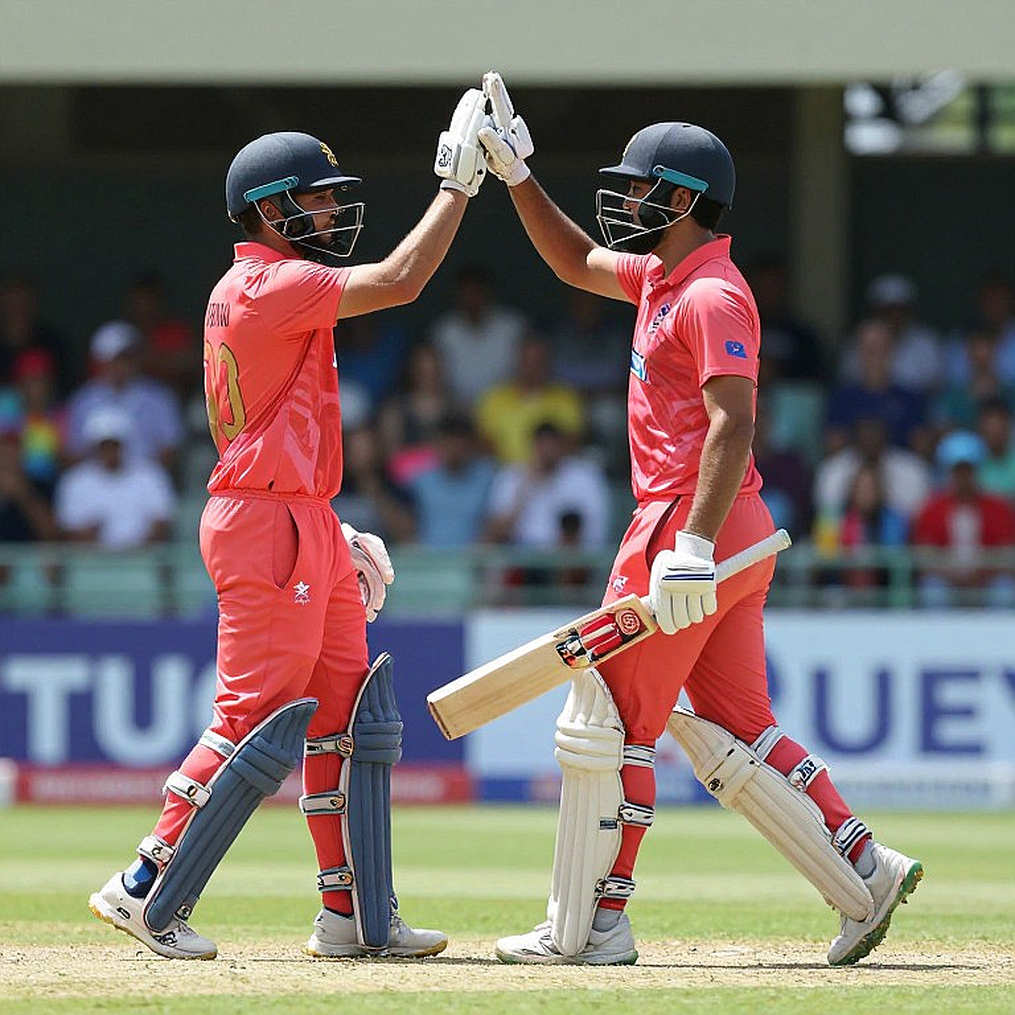
Then came thirty overs. Thirty overs on the trot, while from the other end the spinners bowled in rotation — three of them, one of whom was a top-order batter who had made twenty-six himself and had also sent down ten overs of his own. Across those thirty overs the young quick changed fielding positions twice, came over once for a drink, and once chased a ball to the boundary and came back with mud on his boots. Nobody looked at him. In my notebook that day I wrote: "He is still waiting to bowl. Nobody wants the ball from him."
The picture is not new. In Bangladesh's domestic red-ball cricket it is so familiar that nobody registers it any more. But there is a reason to sit down and keep the ledger this season. Of the Test series in the calendar ahead, only one is at home. The rest will be played on pitches where the seam moves in the first session, where the ball swings in the second, and where in the third you will see men standing with a hand pressed to a groin. Who bowls in those places is being decided right now — on the wickets of Sylhet and Khulna, where a young quick stands at fine leg for thirty overs.

How the domestic four-day structure is built
The National Cricket League is the main river of Bangladesh's red-ball pipeline. The divisional sides play four-day matches inside a fixed winter window — some seasons split into two tiers, some seasons run as a single league, and the format has changed more than once. But one thing has never changed: the season is assembled in the gaps of the international calendar, and those gaps are now sold to franchise cricket.
Squeezed around the January-February T20 league, the four-day matches land in such a way that a side can almost never field its full strength. National-team spinners come, play, and leave. Fast bowlers often do not come at all, and when they do they rarely bowl more than two spells — because next week a franchise wants them for four overs, and if a muscle tears while they are ramping it up, the loss belongs to a club, not to a division.
The geography of the wicket, and the price of grass
There is a comfortable line about domestic pitches in Bangladesh: this soil is for spin, pace does not work here, therefore no fast bowlers are produced. The first half of that is true. The second half is laziness. The wickets in Sylhet, Khulna, Rajshahi and parts of Cox's Bazar are genuinely slow — but slow is one decision, and bare and dry is another.

What I found in my notebook was an accounting exercise. To build a four-day pitch with four inches of grass you need groundstaff across three shifts, irrigation timed correctly, and a rolling schedule that survives the weather. In Sylhet in winter, morning dew and the mist that sits until ten o'clock upend that schedule almost daily. There is an easier route: cut the grass, harden the soil, bat for two days, spin from the third. The match lasts four days, a result arrives, the ground is not empty, and the board saves money.
Nobody takes that decision with malice. Nobody says we do not want to produce fast bowlers. Yet every season, that is exactly what happens. The question is therefore not about anybody's intent; it is about arithmetic. And the sum nobody writes down is this: across a four-day season, how many overs do the country's young quicks actually get to bowl. The number I first wrote in my 2026 notebook has barely moved in a dozen matches since, even when I counted only spells and not injuries.
The comfort of spin, and the orphanhood of pace
A captain's calculation is easy to follow. On the first day of a domestic innings, with no wind, with the seam smoothed flat within three overs, and with the surface crumbling into small patches of dust, naming two quicks and three spinners is not prudence — naming one quick and four spinners is. That is the internal logic of the game, and it cannot fairly be blamed.
The problem arrives afterwards. If a side fields one seamer in the first innings of a four-day match, and that seamer bowls six spells of three overs each, he will learn the art of losing rhythm. A fast bowler is not built in the sixth, twelfth and sixteenth overs of an innings. He is built in an unbroken eight-over spell where his breathing goes in the second over, where the wind goes in the fourth, and where in the sixth he discovers something he did not know about himself — a cutter, or a change in his follow-through.
That learning does not happen on domestic grounds. There, a young quick has two jobs: two wickets inside seven overs, then run towards the long boundary. Over the next two days he is either on the physio's table or looking at his phone for the date of a franchise auction. And so his craft stays unfinished. The action that must survive a thousand overs in Test cricket is tested instead in December mist, in spells of five or six.
Ball change, and the four-spell problem
In Test cricket, the factory that produces fast bowlers is a factory of fatigue. One session, a fifteen-minute break, then suddenly again. A nine-over net spell teaches the body less than one or two overs bowled off a short run on a hard surface, where the knee does not give and the shoulder does not slide. This is exactly where Bangladesh's problem sits — young quicks never stitch together a long-format innings out of these small, broken spells.
Then there is the ball. On a dry, dust-free pitch, one side of a fifty-over-old ball never really scuffs, because there is no sand worth scuffing it on. So there is no hint of reverse or of carrom, and at the end of the day the seamer takes refuge in cutters, in the defensive ball outside off, and in a small, chopped run-up. On foreign wickets that refuge fails, and he does not know the road back to his own method.
The fatigue then shows up away from the ground. When a quick returns to the national side in April or May, what is asked of him is unfamiliar — the rhythm of a one-day spell, two overs at a time, fitness tests. In that gap he tinkers, and in tinkering he finds injuries. So it is not only that the domestic season keeps no ledger for its quicks; the national side has to keep one too.
Who selects? Three people
More than three people pick Bangladesh's red-ball side, in my reading. The first is the BCB selector. The second is the franchise — because the franchise builds its own timeline, and that timeline reshuffles the national team's preparation calendar. The third is more capricious and the most powerful: when an overseas club or league offers a quick a six-week deal, his internal weight changes. That is not greed; it is livelihood arithmetic.
Which brings the question of the year. In a Bangladesh fast bowler's working life, what is the most valuable thing? Bowling five straight days in a domestic four-day match, or four overs in a rising league? Nobody says the answer out loud, but behaviour always does. The transfer market is a rumour with a heartbeat — and that heartbeat now sounds louder than the mist over a domestic red-ball ground.
This is not a question of morality. A quick's spell breaks, his sequence changes, the minimum skillset reduces to 'hit the deck, keep it outside', and the job of preparing him for twenty overs a day in a Test is being done by nobody in domestic cricket. A seasonal physio may save two dozen deliveries a season, but by year's end the saving shows up in a dead quiet innings, and it costs him. Then it comes back in the sun.
The batter who has never seen 135
The lazy assumption is that this deficit belongs to the fast bowlers. In fact its heaviest victims are the batters, and none of them know it. In a domestic innings they rarely face six or seven overs on end at eighty-four or eighty-six miles an hour. When such a batter lands in the first session on a pitch in Durban, Wellington or Nottingham, his feet move early, his bat comes into his body line, and his defence turns into reaction rather than prediction.
I have watched this repeatedly: the first hour is really an examination. Batters from number three to number five — some survive it, but none play it with conviction. The reason is simple. A player who has never been made to turn and re-turn in domestic cricket feels the jolt the moment he walks out. But this deficit does not show in innings, runs or ratings, because on a domestic turner, runs arrive on a different equation.
What amused me is something I saw again and again in one season: in the second innings of a domestic match, deep into the fourth or fifth session, an away-seamer quivers towards slip, and a top-order batter comes forward onto the front foot. The hand that plays that push is the same hand that plays the domestic match — but the echo has changed, the wicket has changed. The away-going ball lives in one place permanently, and its name is waiting. I do not know what the new generation calls it; my own pads always answered, out there the bat is unrehearsed and the hands work on guesswork.
The national mirror: a game, and a silent sum
The selector's most useful calculation is how many overs can be squeezed from pace and how many from spin across five days of a series. The sum is not emotional, but the decision comes only from there. Naming two quicks in a Test makes the third quick a bet on how the wicket was prepared, and that bet shows up at the end of an innings.
That is where the experience gap is exposed. Whether a quick can be given four hundred balls in one series depends on his workload in the domestic month just gone. This season, Bangladesh has handled it two ways — reducing the load on senior quicks, and fast-tracking newcomers in a way that later reflects in cumulative stress. Between those two, some young quicks have a bright first year, then suddenly lose their action's rhythm a few months later.
I would call this cricket's industry: workload management, contract arithmetic and the physical load of travel. In Bangladesh's calendar, everything now carries extra weight — because overseas series are stacked back to back, and the domestic season begins immediately before them. From this boundary, the quicks' hardship is visible on two axes: the frustration of a ball that will not talk, and the career that will not carry the body.
So the ledger is not only the physio's. It is the selector's, the airport's, and increasingly it is visible from the very start. In the first three innings of this season, on domestic wickets where the ball does not bend, matches were played with four or five spinners. A month later, the international pace attack has to be counted from a short first list. Nobody fills that gap, because the gap belongs to the calendar, not to intent. The board may want to shape a four-day base in a season or two, but by then the quick is looking at the trophy paperwork, where it says occupation, and one name.
Looking from the other side: what is needed is not a quick, but a batter
Everyone says the same thing: Bangladesh needs fast bowlers. That is true, but only half true, because a fast bowler is produced by a structure, not by demand. If I ask instead who would gain most if the domestic league mandated grassy wickets for the next five years, the answer is the batters. Because a man who has survived ten straight overs against a sharp seam suddenly learns to move his eyes and feet together, to protect his shoulder when the ball comes, and the treatment — that discomfort — stays far longer than the talk does.
The conventional reading is inverted: that changing domestic wickets would hurt on overseas tours because confidence would break. That is workplace reality. Confidence actually breaks where an unprepared side takes a hit and flies home five days early. If the wicket is not straightened out, I ask why we have left this decision to preference rather than budget. It is not a moral question; it is the speed of the game, whether or not anyone likes it — the game will be played.
One more thing happens this season, and it belongs in the ledger: with the pace of these domestic matches, a result inside two days means nothing for Test preparation. Without a long four-day balance, a player who cannot go deep into a thirty-over spell will, at intervals, look good for three overs. The result is injury; the result is a sudden collapse in one innings. The cycle does not break, because the cycle is structural, not intentional — who guards the domestic ground, who cuts the grass, who spreads the water. In the end, the blame lands only on one fast bowler's figures.
The signal to watch from this season's ledger
In the first three weeks of the domestic red-ball season I will be watching one thing: how many overs of pace a side bowls in its first strike of the first innings, and what role the quicks hold by the second week of the innings. The first signal is the grass on the wicket; the second is the selector's patience. But I also know this much: where physical strength is thin, home history supplies the courage; a golden generation is expected to make up the rest with the bat. From the press box what was visible was the quicks' banter for the red ball, and beneath it a plan kept hidden. One question remains: will those who will not bowl eventually decide who does? The answer arrives exactly then — when the next four-day match is played after the summer. This game has another name, and it is waiting.